
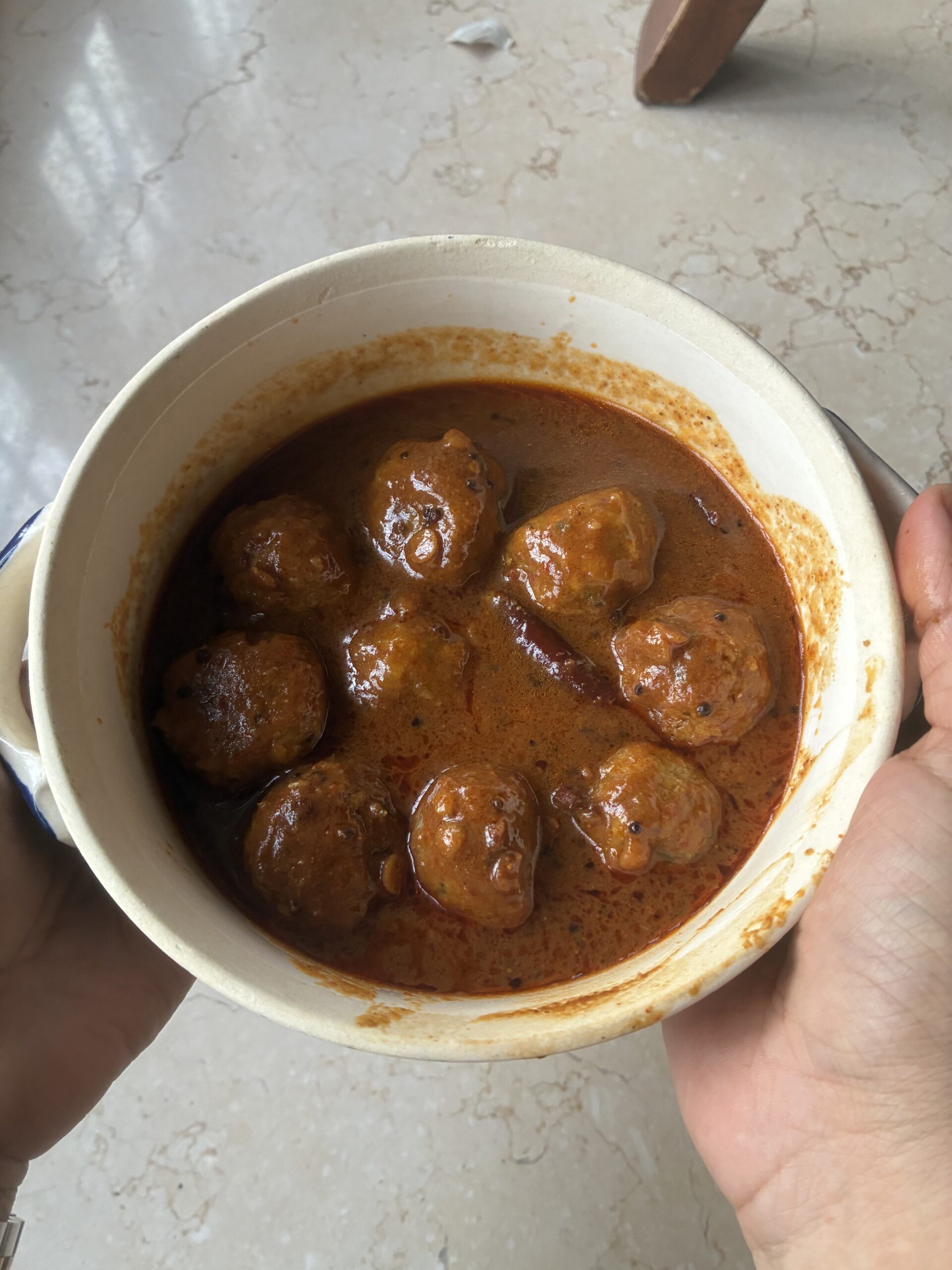
Some recipes don’t need an introduction — they just need one bite.
Paruppu Urundai Kuzhambu is one of those timeless South Indian recipes that never goes out of style.
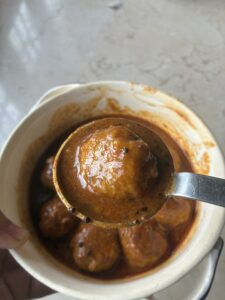
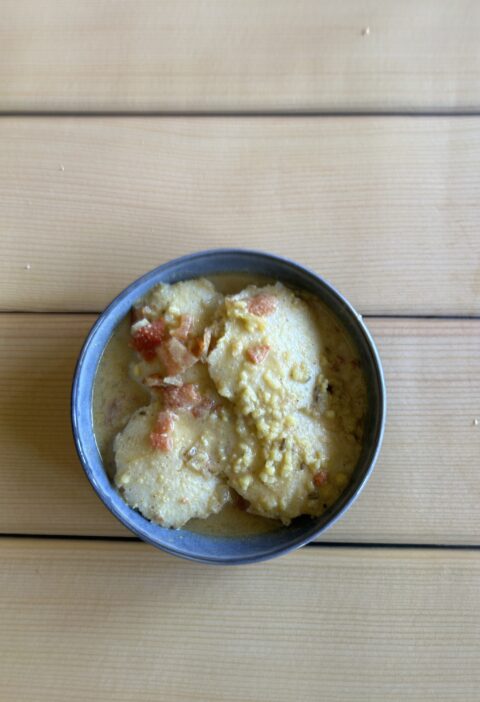
Soft steamed dal dumplings simmered patiently in a tangy, flavourful tamarind gravy — no onion, no garlic, pure and simple, just like Amma and Paati used to make.
This is my granny’s version — the one I grew up eating — and every single time I make it, it takes me right back to her kitchen.
Serve it hot with steamed rice and a drizzle of ghee. That’s it. That’s the whole meal. ❤️
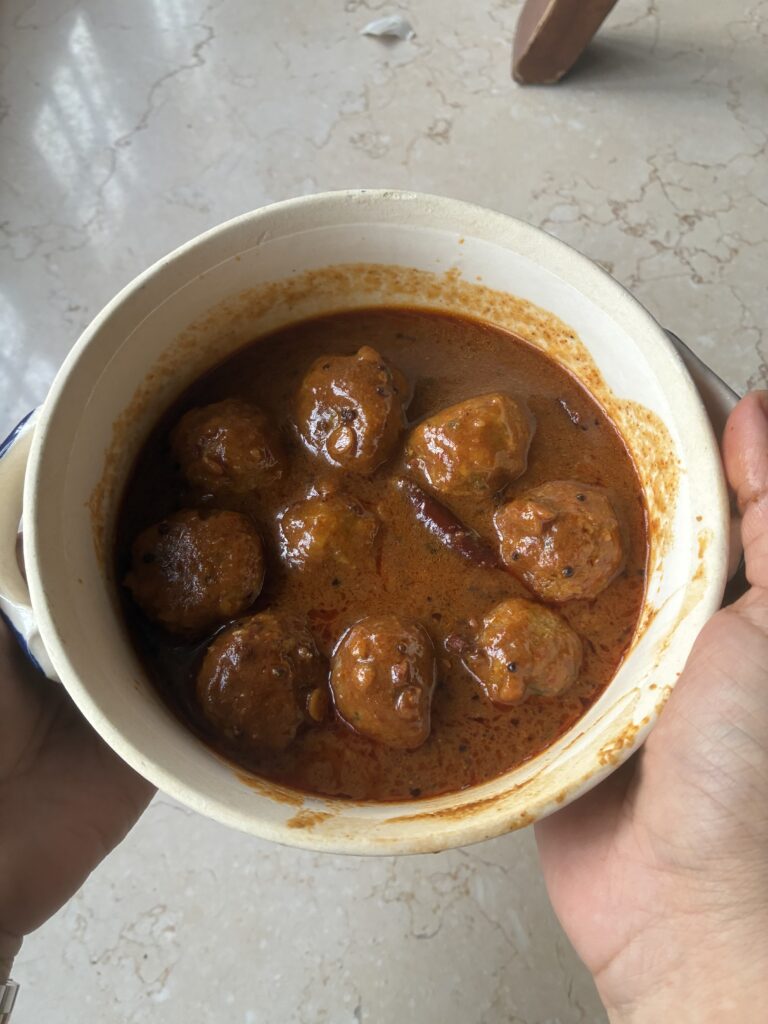
Why You’ll Love This Paruppu Urundai Kuzhambu
❤️ A timeless classic — one of those recipes that never goes out of style
🌿 No onion, no garlic — pure, clean flavours the traditional way
🫙 Tangy tamarind gravy that naturally thickens as the urundais absorb the flavours
🥣 Soft steamed dal dumplings that stay intact and don’t break
🍚 Perfect with hot steamed rice and a drizzle of ghee — a complete comforting meal
👵 Granny’s recipe — made exactly the way it’s meant to be made
How to Make Paruppu Urundai Kuzhambu
Step 1 — Make the Urundai:
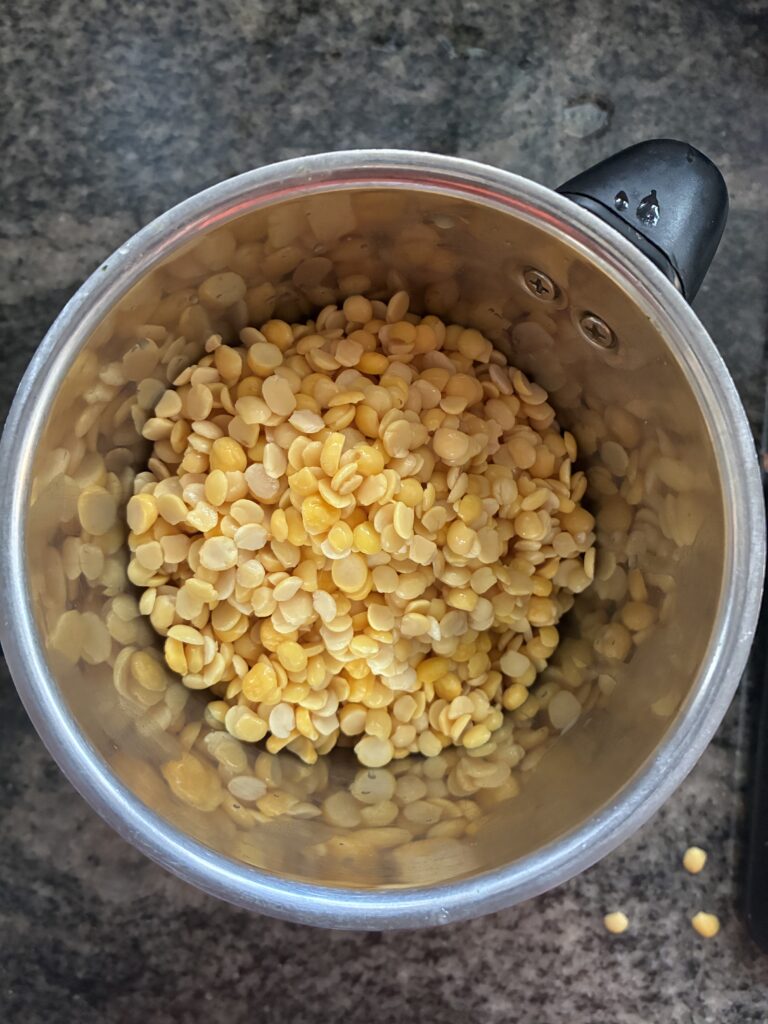
Wash the toor dal and chana dal well and soak for 2 hours.
Drain completely — do not leave any excess water.
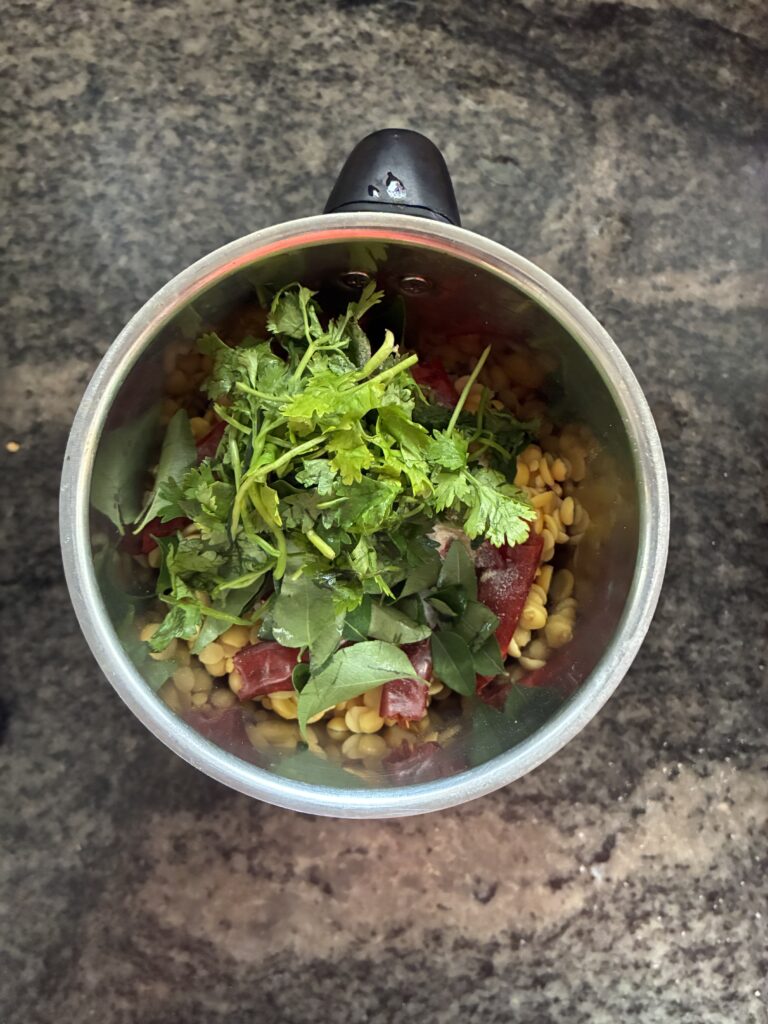
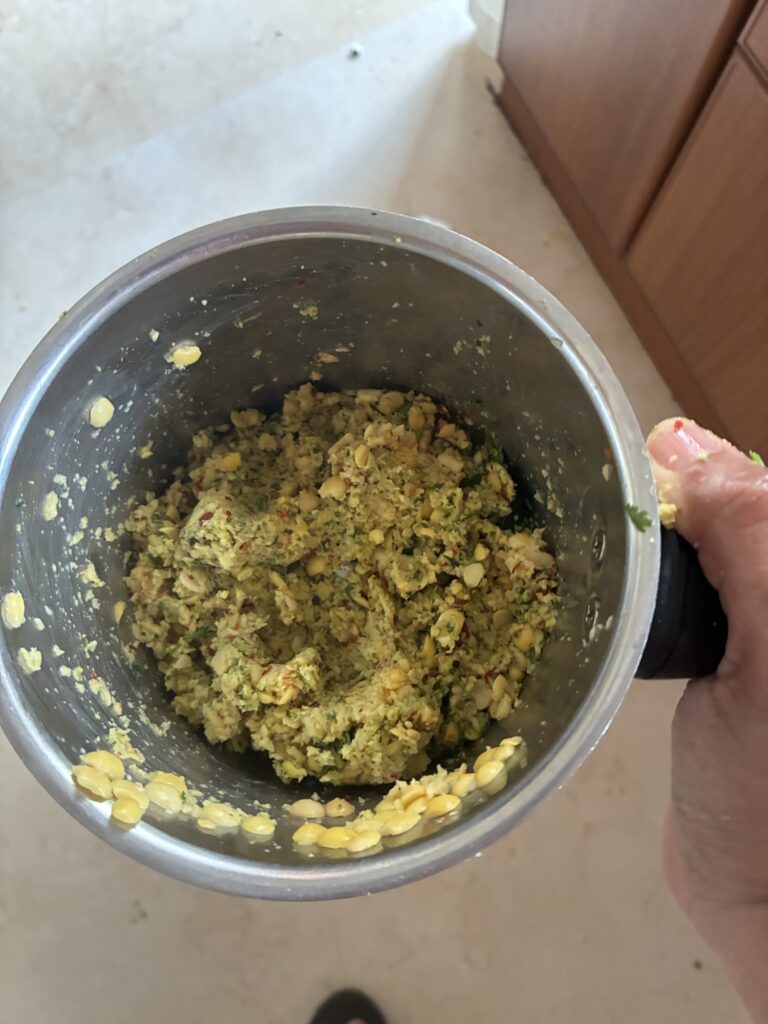
Grind with red chillies, curry leaves, coriander leaves, turmeric, and salt to a coarse mixture.
Do not add water while grinding — this is the secret to urundais that stay soft and intact.
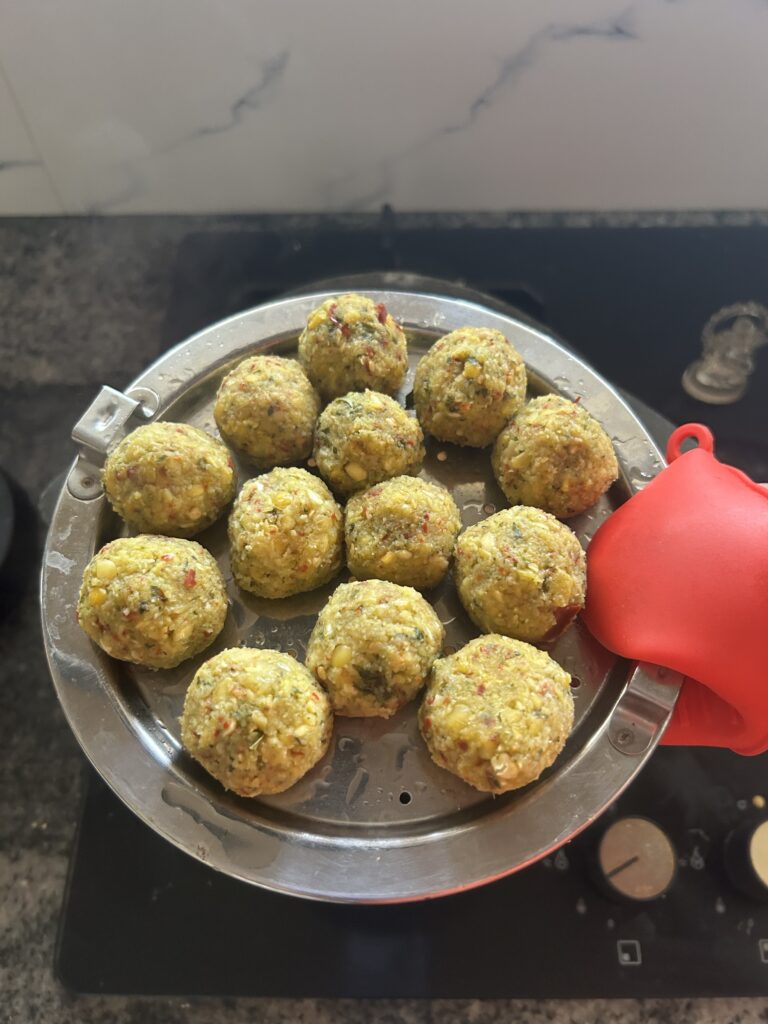
Shape into small smooth balls and steam for 10-12 minutes until firm, cooked, and the colour changes.
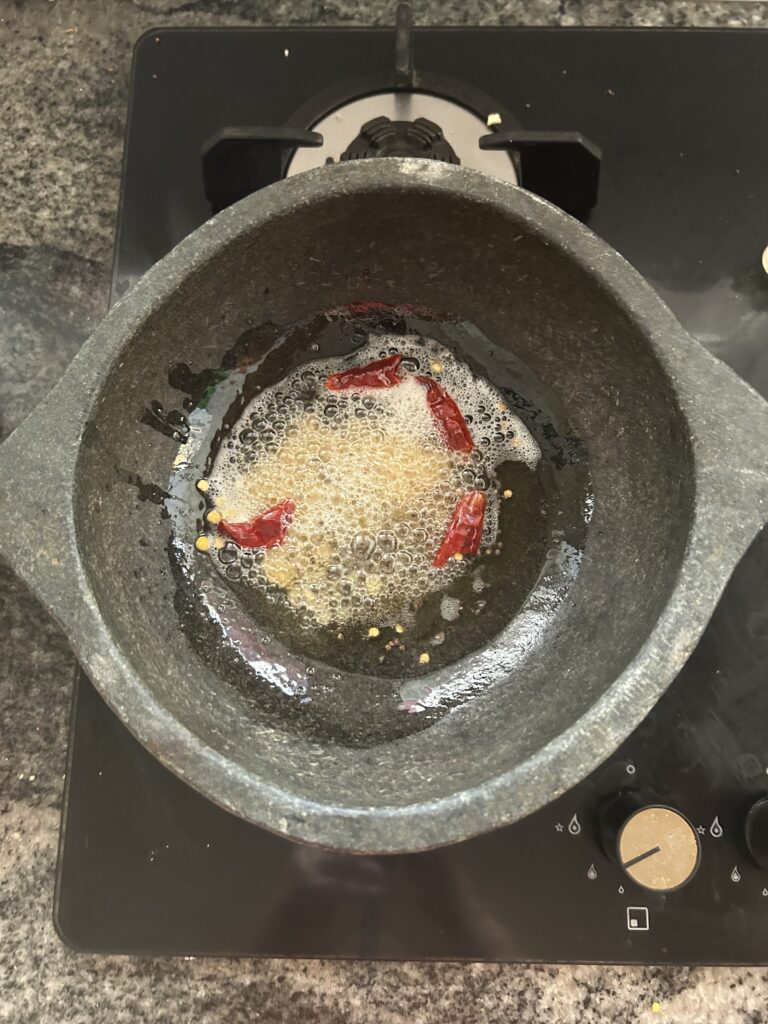
Heat gingelly oil in a kadai and temper mustard seeds and fenugreek seeds.
Add toor dal and dried red chillies. Sauté well.
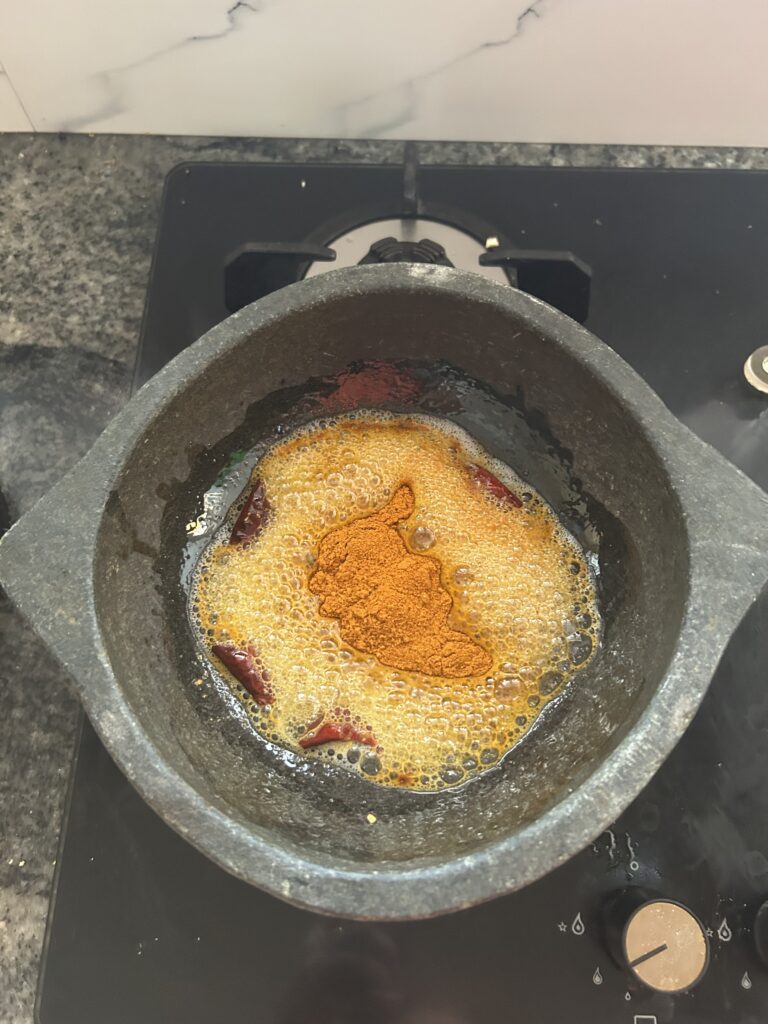
Add sambar powder and mix.
Pour in tamarind extract and required water.
Add salt and a little jaggery.
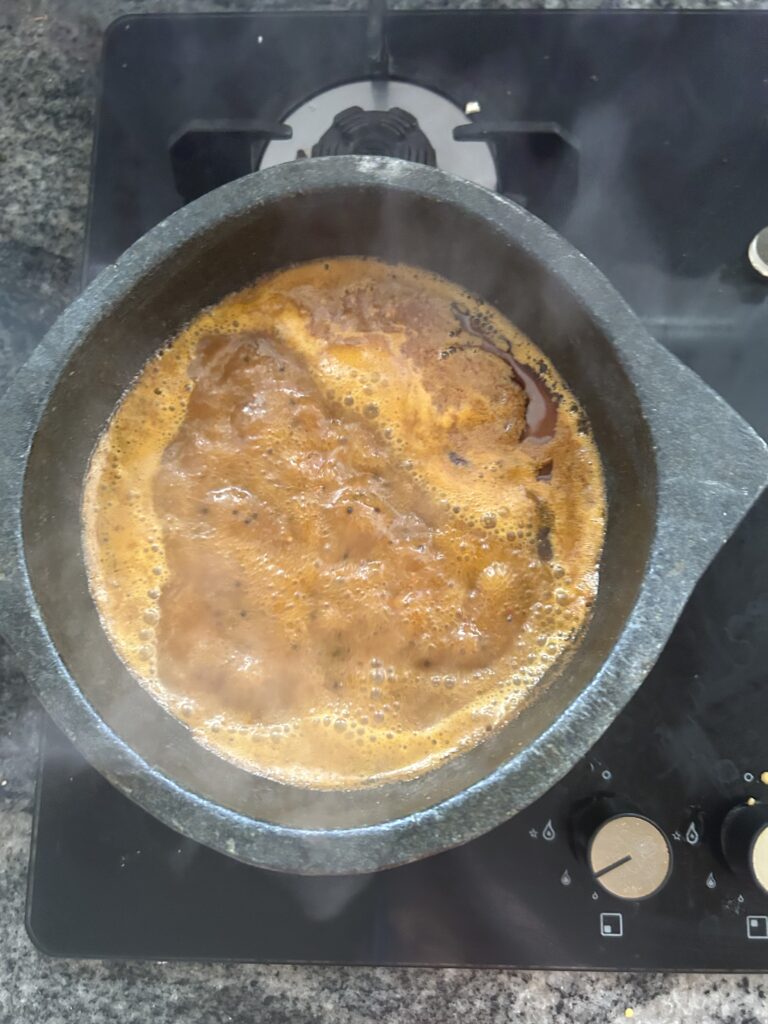
Let the gravy boil well.
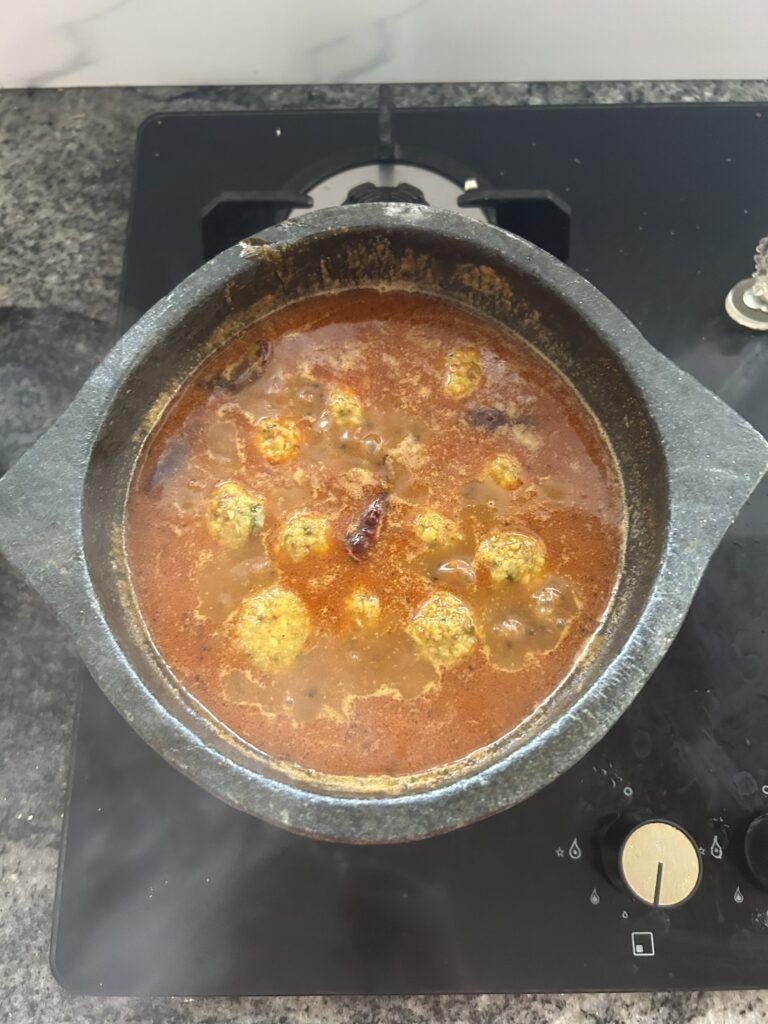
Carefully add the steamed urundais into the boiling kuzhambu.
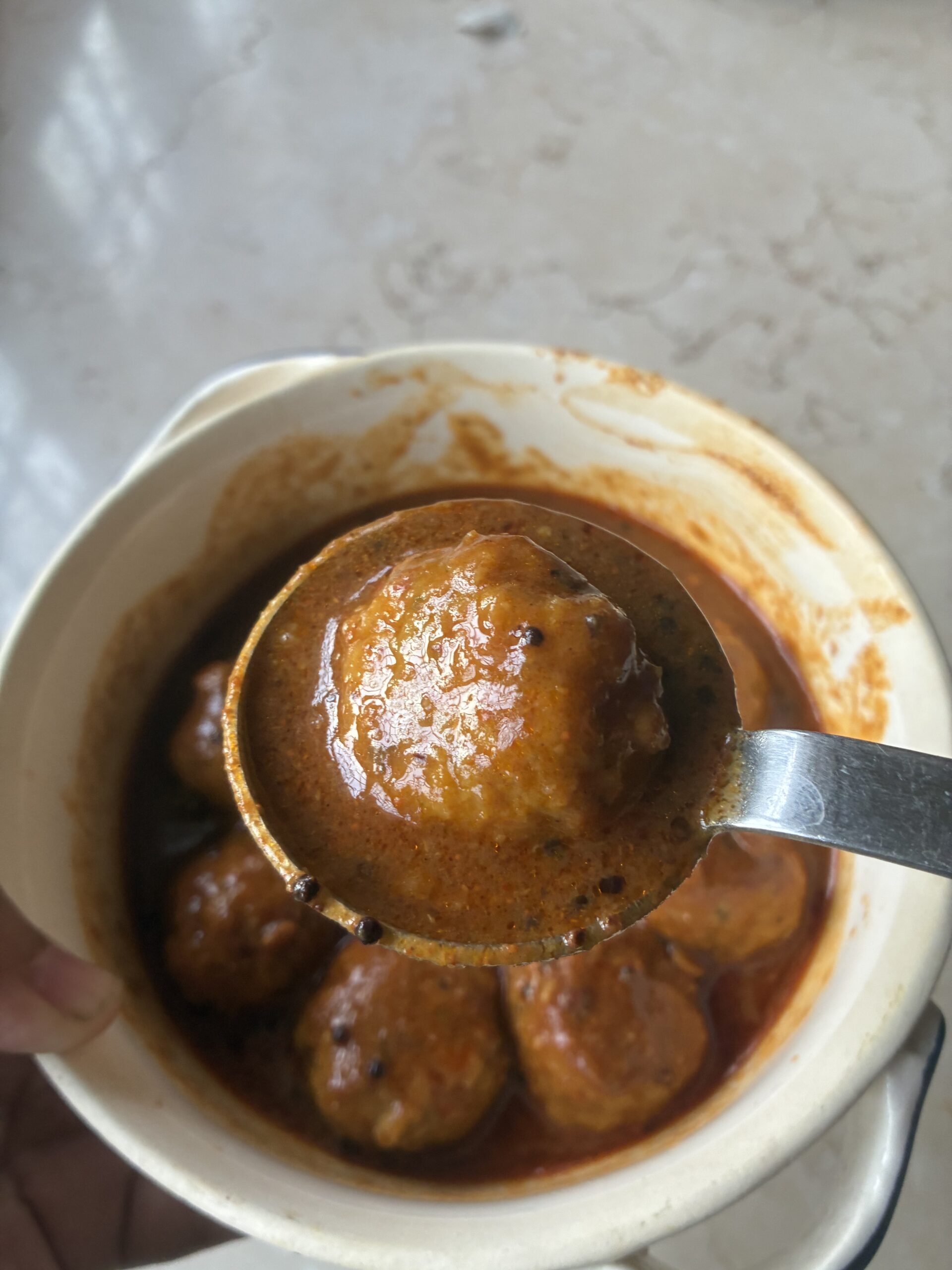
Simmer patiently until the gravy thickens and oil starts separating.
Serve hot with rice.
Paruppu Urundai Kuzhambu | Soft Dal Dumplings in Tamarind Gravy
Ingredients
Method
- Wash the toor dal and chana dal well and soak for 2 hours.
- Drain completely. Do not leave excess water.
- Grind with red chillies, curry leaves, coriander leaves, turmeric and salt to a coarse mixture. Do not add water.
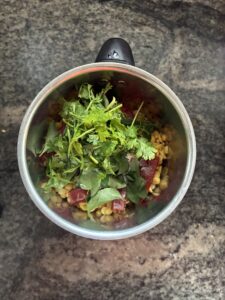
- Shape into small balls.
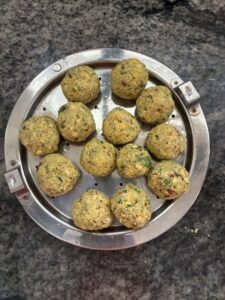
- Steam for 10-12 minutes until firm and cooked and colour changes.
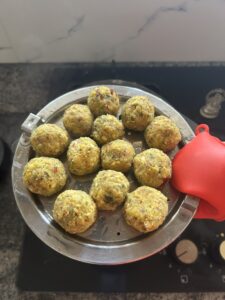
- Heat gingelly oil in a kadai and temper mustard seeds and fenugreek seeds.
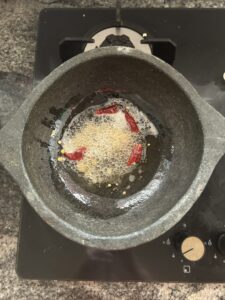
- Add toor dal and dried red chillies. Sauté well.
- Add sambar powder and mix.
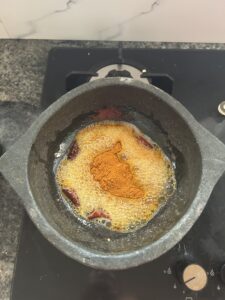
- Pour in tamarind extract and required water.
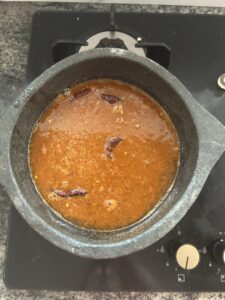
- Add salt and a little jaggery.
- Let the gravy boil well.
- Add the steamed urundais carefully into the kuzhambu.
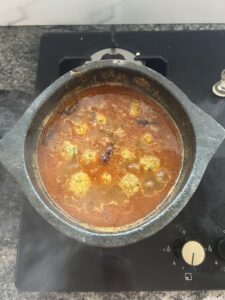
- Simmer patiently until the gravy thickens and oil starts separating.
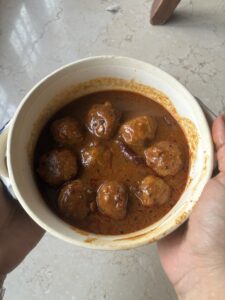
- Serve hot with rice.
Notes
Drain the soaked dal completely before grinding — even a little excess water can make the urundais break.
Steam the urundais before adding to the kuzhambu — this is what keeps them firm.
The gravy will look thin initially — don’t panic, it naturally thickens as the urundais absorb the flavours.
Always use gingelly oil for authentic flavour — it makes a big difference in traditional kuzhambu.
Add jaggery — just a little balances the tanginess of the tamarind beautifully.
Pro Tips for Perfect Paruppu Urundai Kuzhambu
- No water while grinding — this is the most important tip; a coarse mixture without water is what keeps the urundais from breaking in the kuzhambu
- Drain the dal well — squeeze out all excess water after soaking before you grind
- Steam before adding — always steam the urundais first; adding raw balls directly to the gravy will make them dissolve
- Be gentle when adding urundais — carefully place them into the boiling kuzhambu, don’t stir aggressively
- Simmer patiently — don’t rush the simmering; the magic happens slowly as the urundais absorb the tamarind gravy
- Gingelly oil only — for authentic Tamil kuzhambu flavour, gingelly oil is non-negotiable
What to Serve With Paruppu Urundai Kuzhambu
🍚 Hot steamed rice with a drizzle of ghee — the only way to eat this
🥗 Appalam or papad on the side — for that satisfying crunch
🥬 Simple stir fry vegetable — keeps the meal balanced
🫙 A small bowl of curd rice to finish — the perfect ending to a traditional Tamil meal
Frequently Asked Questions
Why are my urundais breaking in the kuzhambu?
The most common reason is too much water in the ground mixture. Always drain the dal completely and grind without adding water — coarse and dry is the goal.
Can I skip steaming and add the urundais directly?
No — steaming is essential. It firms up the urundais so they hold their shape when simmered in the kuzhambu.
Can I use coconut in this recipe?
This is a no-coconut version.
How long should I simmer the kuzhambu?
Simmer until the oil starts separating and the gravy visibly thickens — usually 15-20 minutes after adding the urundais. Patience is key.
Can I make this in advance?
No , best had fresh
Why gingelly oil specifically?
Gingelly oil (sesame oil) is traditional for Tamil kuzhambu recipes — it gives an authentic, nutty depth that regular oil can’t replicate.
A Note From My Kitchen 🤍
This is my granny’s recipe.
No onion. No garlic. Just pure, honest ingredients cooked with patience — exactly the way she made it.
I grew up eating this with hot rice and ghee on lazy afternoon lunches. It’s the kind of food that stays with you forever — not just in memory, but in the way your hands automatically know what to do when you start making it.
The secret she always said? Don’t rush the simmering. Let the urundais sit in the kuzhambu, absorb the tamarind, and do their thing.
Some things can’t be hurried. 🙏❤️
Tried This Recipe?
Leave a comment below — do you call it Paruppu Urundai Kuzhambu at home too, or something else? 😍
For more everyday recipes visit us at homebites365.in
Follow us on Instagram @homebites.365 — new recipe every single day!
Have a question? Write to us at homebites365@gmail.com 🙏
Love traditional South Indian recipes? Check out my Veg Paayaa — a rich restaurant-style side dish for idli and idiyappam!https://homebites365.in/veg-paayaa-idli-idiyappam-side-dish-recipe/
[…] Love no onion no garlic recipes? Check out my Paruppu Urundai Kuzhambu — a traditional no onion no garlic South Indian classic!https://homebites365.in/paruppu-urundai-kuzhambu-recipe-no-onion-no-garlic-dal-dumpling-gravy/ […]